

Supporting Wisconsin’s behavioral health workforce: Introducing Erin Schuler
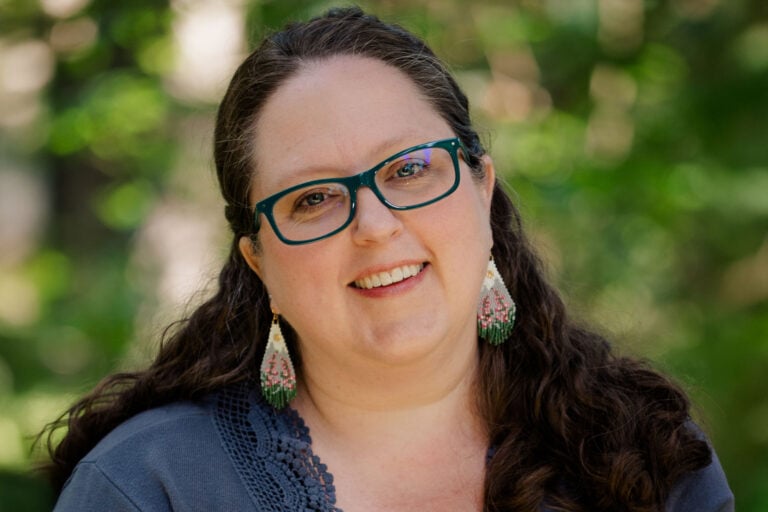
We were pleased to welcome Erin Schuler, MSW, as our new program developer for continuing education in behavioral health in July 2025. Part of the University of Wisconsin–Madison Division of Continuing Studies (DCS), our Behavioral Health programs serve psychologists, human service providers, therapists, social workers and others. A variety of courses and programs offer these helping professionals the continuing education they need to build their skills and knowledge and to maintain licensure or certification requirements.
Erin brings a strong foundation in behavioral health, social work and adult education, with a proven record in developing impactful training programs for diverse audiences, reinforcing her expertise and the value of our continuing education offerings. Below, she shares a bit about her background, why continuing education is important for behavioral health professionals and how she plans to build the program.
Tell us a little bit about your educational and professional background in behavioral health, and how it informs your work in your new role at DCS.
I received my bachelor’s and master’s degrees in social work from the University of Wisconsin-Milwaukee. I really enjoyed my experience at UWM and the internship I completed in Milwaukee. I have always been inspired and intrigued by the field of social work because of the vast opportunities the degree offers. Graduates of social work can pursue careers in schools, hospitals, therapy offices, courtrooms and more. This was comforting to me as a young student, knowing I would find the niche that worked for me.
As I pursued my studies and early career roles, I realized I wanted to pursue leadership or administrative roles in social work. I also wanted to gain direct field experience to be the best leader I could be. I have been so lucky to work in a wide variety of social service settings, including long-term care facilities, federal mental health agencies and even public libraries! This field experience allowed me to see what practicing social workers need and why continuing education can be difficult for busy professionals to achieve.
I have brought this lens to my work at DCS by ensuring we offer courses that meet licensure requirements at a fair price point and that can be completed in an asynchronous online format.
Beyond taking courses to meet licensure requirements, why is continuing education particularly important for behavioral health professionals?
Behavioral health is an incredible field in that the work you do is different every single day. I remember the difficulty of transitioning from the classroom to the field, and how many therapeutic techniques are not fully taught in graduate school.
Enrolling in continuing education courses allows behavioral health professionals to maintain confidence in their work. This confidence allows behavioral health professionals to work in a wide variety of settings and utilize a wide array of techniques.
Additionally, behavioral health professionals are expected to stay informed about any changes in the field. Think of the changes in our world just in the past 5 years — like the addition of AI, new emphasis on telehealth therapy or the massive increase in demand for services after the COVID-19 pandemic. Not only do all of these changes intersect with our field and how we best service our clients, but they may not have existed when we were studying for our degrees! That’s why continuing education is so important.
As licensed behavioral health professionals, we also must adhere to our code of ethics. For example, the National Association of Social Workers (NASW) Code of Ethics cites “competence” as a core value of the field of social work, stating, ” Social workers continually strive to increase their professional knowledge and skills and to apply them in practice. Social workers should aspire to contribute to the knowledge base of the profession.” Similarly, the Ethical Principles of Psychologists and Code of Conduct also notes the importance of competence and continual learning. As we continue to assist the individuals we serve, it is important to keep continuing education at the forefront.
Many of our continuing education courses for behavioral health professionals focus on self-care. Why is that?
Self-care is so important for mental health clinicians and those in the field, as the work is difficult and ever-evolving. Investing in a course on self-care, mindfulness techniques or Motivational interviewing (MI) can help behavioral health professionals grow their skills in how best to serve themselves. These skills can help make us happier, safer and more patient professionals.
How will you use your role in DCS to support behavioral health professionals?
The field of behavioral health is experiencing continual, rapid growth in our community here in Wisconsin and beyond. So many of our behavioral health professionals need high-quality and accessible training for both professional development and licensing requirements.
I look forward to working with others on our team to build our continuing education portfolio featuring courses on evidence-based practices, ethics, mental health and more. My goal is for UW–Madison to remain a trusted source of continuing education for our community and beyond.
What do you do when you’re not at work?
Outside of work, I enjoy disc golfing, playing pickleball with my husband, reading and sewing. I’m a Wisconsin native and was thrilled to return to my home state with my husband as he began his medical residency at UW Health.
Discover more about continuing education in Behavioral Health at UW–Madison and contact Erin Schuler at eschuler3@wisc.edu to learn how our programs can support your professional growth.

Post written by Jill Schaefer.
Related Posts


Published on Feb 10 2026
Last Updated on May 21 2026
Categories: Continuing education, News
Tags: adult learners, behavioral health, faculty & staff, professional development
