
Languages connect humans in and out of classrooms
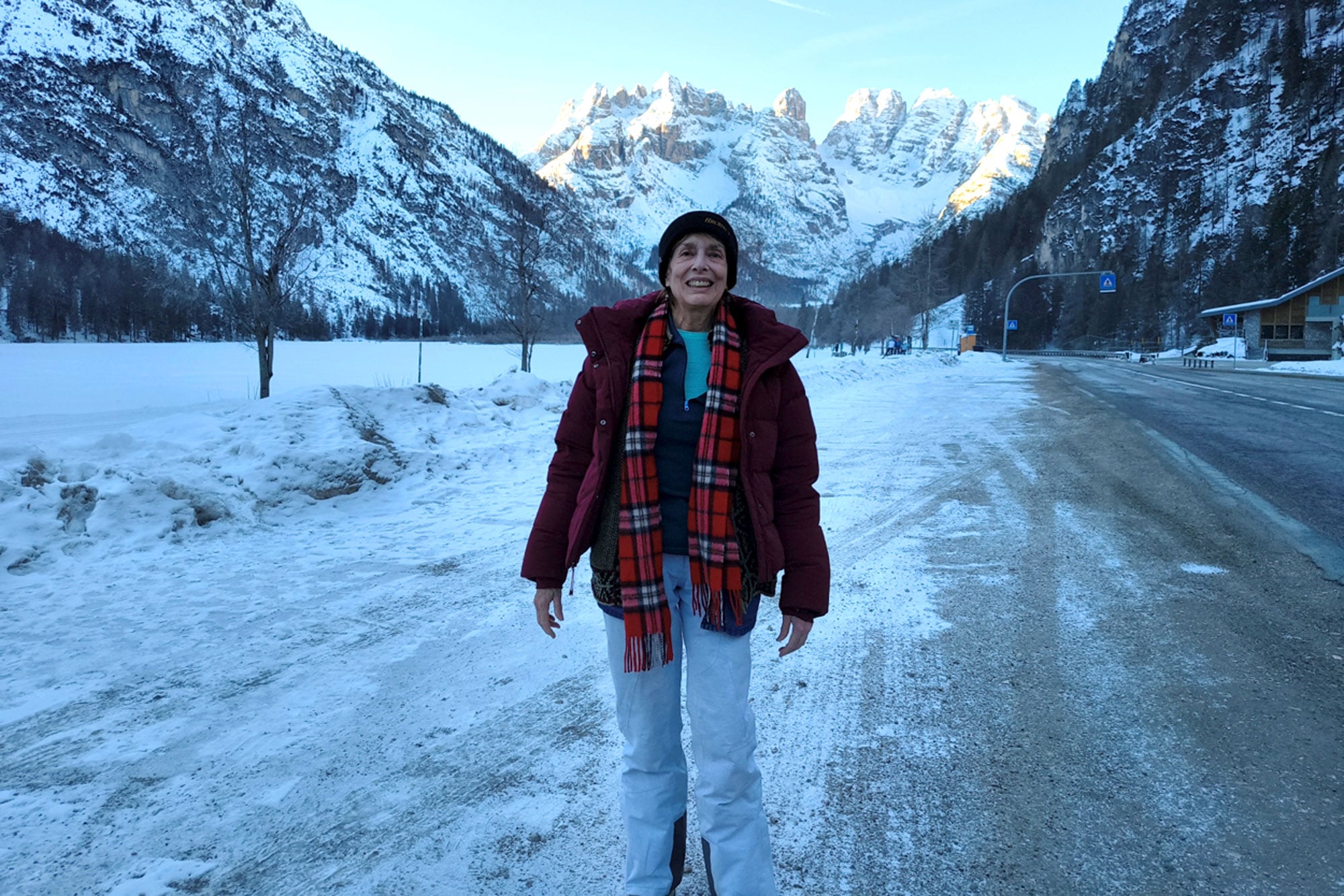
Languages student Zoe Norwood, in Italy for the Olympics.
Seventy-five-year-old Zoe Norwood knew she was going to the Milano Cortina 2026 Winter Olympics in February, but there was one problem: She didn’t know any Italian.
To prepare, Norwood signed up for an Italian course through the University of Wisconsin–Madison’s Continuing Education (CE) Languages program.
The Division of Continuing Studies (DCS) at UW–Madison offers noncredit programming in CE curriculum for individuals who are “passionate seekers” and want to continue learning outside a traditional path.
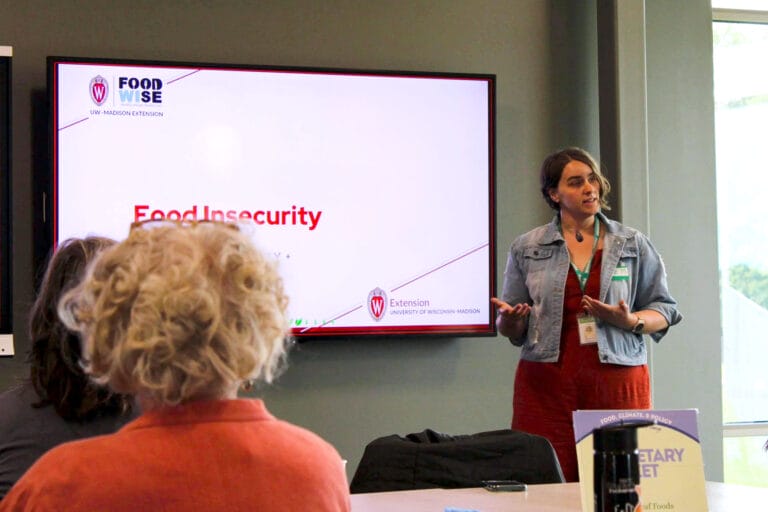
“What is specific to our department is that we have this really wonderful mix of community focus and academic rigor,” said Liz Murphy, Languages program developer. “We also really focus on the social aspect and helping people to learn the language in a very practical way that’s immediately usable.”
Murphy cited how most of their students take the courses because they’re, for example, “going on vacation or moving to live in a new country or they want to speak the language at work. And I think that we’re really great at facilitating that.”
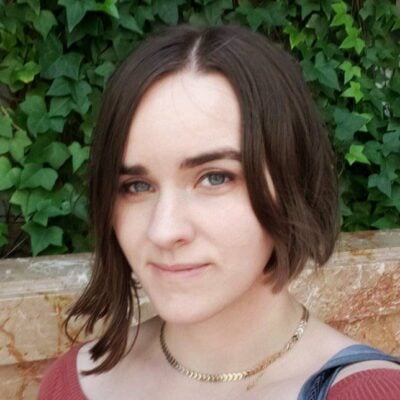
Liz Murphy
Teacher and student meet at Olympics
Norwood studied with Dario Sponchiado, one of three Italian instructors at CE. Sponchiado grew up in Milan, where he earned his master’s degree at the University of Milan and started his journey in language learning. Even though he primarily uses Italian and English, Sponchiado took courses in French, Spanish and Portuguese.
He did not see himself teaching, but his interest in languages brought him to UW–Madison.
“I didn’t think that I wanted to teach Italian, right? But that’s what happened because of my passion for the language, and at the end, this is where I landed,” Sponchiado said.
Although he teaches online and has never set foot in Wisconsin, Sponchiado has not felt disconnected from his students.
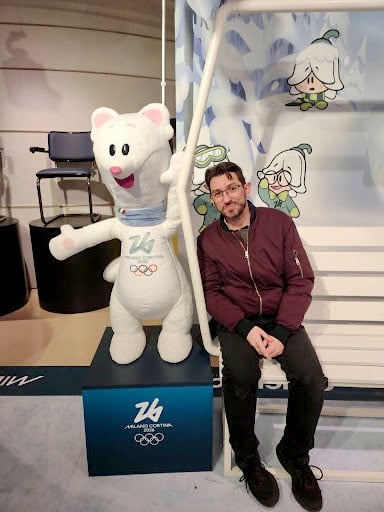
Dario Sponchiado at Milano Cortina 2026 Olympics with mascot Tina. Photo Courtesy of Dario Sponchiado.
“I think I have a human connection — as much as possible — with every student that I have in front of me,” Sponchiado said. “I think it’s possible.”
Despite never seeing himself as an educator, Sponchiado’s connection with his students carries beyond the classroom. Norwood and Sponchiado met face-to-face at the 2026 Winter Olympics in Sponchiado’s hometown.
“It was fun meeting both him and his wife,” Norwood said, describing how the three of them toured a historic castle together. “It was very interesting, and he was able to point out some things that he knew about since he’d grown up in Milan.”
Sponchiado said he appreciates it when good people online are also good people in reality, adding, “[Meeting her] was a nice experience to pass from the online to the physical world.”
Learn at your own pace
When learning a new language, Murphy says it’s never too late to start: “I think it’s so easy to end up with decision paralysis and just not ever start.”
With so many ways to learn a language today, students can easily feel overwhelmed. Murphy mentioned free apps, books, college courses and continuing education courses to support learners on their journey.
“I think one of the upsides of our program is that you just sign up for a course and then we provide guidance to help people get from absolute zero in a language to feeling like they can have some of those basic conversations that they need to function,” she said.
Sponchiado encourages adults to take courses as well, but to learn at their own pace.
“You don’t have to pressure yourself too much. It’s a nice stroll, and you just have to walk slowly until you choose when you leave the path,” he said.
That path includes dedicated staff and determined learners.
“There are people who are really passionate about being here. And there are people who, when they come to learn with us, bring such a wealth of experience,” Murphy said. “You hear about your fellow students’ lives and what they’re up to and their hobbies, dreams, jobs, and it’s just this cool way to get to know people in a new language.”
Norwood said the variety of people in a CE class made it a fun experience, and not only for practicing the language.
“At the very beginning [of the course], each of us submitted a bio, so we found out a little bit about each other. That was nice, both as a memory exercise but also just for help in conversing with each other in Italian,” Norwood recalled. “Everybody brought something different to the experience.”
Instructors care about learner progress
Sponchiado feels he can learn something from his students as well.
“I have a student from Seattle, and it’s nice for me to refresh my memory about the geography of the United States and meet people online. They teach me something in some way. Maybe just for one minute, but they tell me something about themselves, and it’s nice,” Sponchiado said.
Murphy said learning can include barriers, but that’s part of the process.
“I would say one of the challenges is overcoming [lack of] confidence to speak in that new language because that’s a scary thing to be doing,” Murphy said. “You’re going to make mistakes because that’s just how learning a language works. If you don’t make mistakes, you’re just never going to say anything at all.”
Norwood took one short course with DCS before flying to Italy, but she was able to use various phrases in Italian to converse with other Olympic spectators and Italian citizens. She described a time when she was in a car and, without even speaking a complete sentence, the driver understood “tempo libero.”
“I had learned from the class how to ask people what they do in their free time — free time is tempo libero. I would just kind of raise my voice and say, ‘tempo libero?’ and they knew exactly what I was asking,” Norwood said, recollecting how the driver said that he and his wife enjoyed going on motorcycle rides in Southern Italy, Sicily and other islands.
Ultimately, Sponchiado said, instructors care about student progress.
“It’s like your kid, when you are proud to see them grow, right?” he laughed. “I’m proud — I’m happy that they are learning Italian.”
For questions or additional information on the Languages program, contact Christopher Moore, learning experience coordinator, at christopher.moore@wisc.edu.

Post written by Zoey Jiang.

Published on Jul 30 2026
Last Updated on Oct 02 2026
Categories: Continuing education, Student stories
Tags: adult learners, international, languages
