
From language learner to instructor: Mirta Pagnucci’s journey with Continuing Education
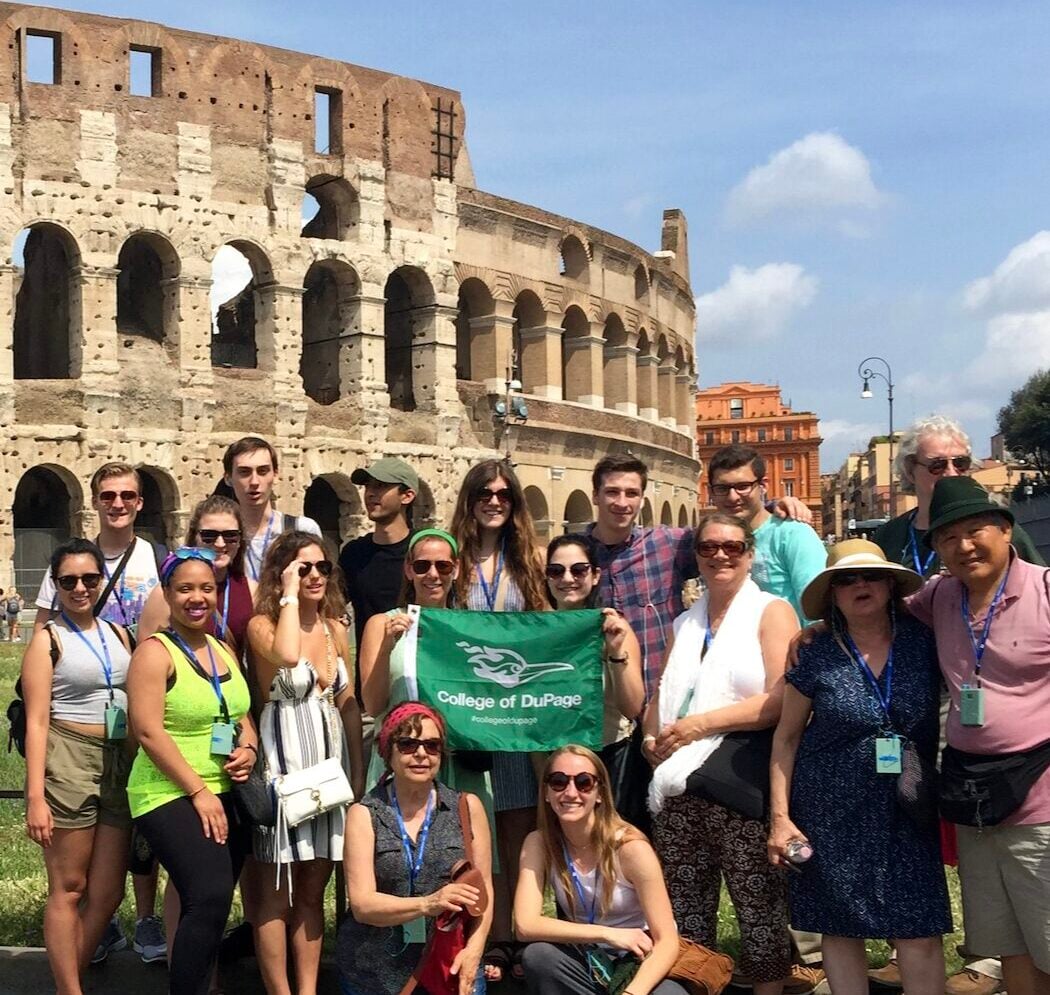
Mirta and her students visited the Colosseum in Rome, Italy, while studying abroad with the College of DuPage in June 2016.
When Mirta Pagnucci arrived in the United States from Italy at the age of nine, she did not speak a word of English. At her Chicago school, there were no ESL programs, so she learned English the only way she could: by immersion. She watched children’s television, read books and listened carefully to others, at first staying quiet out of the fear of making mistakes.
Pagnucci’s early experience of navigating a new language — and the vulnerability that comes with it — would shape the rest of her life. Decades later, Pagnucci is both an accomplished language learner and a language educator, currently an instructor in the Continuing Education Languages program at the University of Wisconsin–Madison. Her journey is a testament to the power of lifelong learning and the unique role that language learning plays in both personal and professional growth.
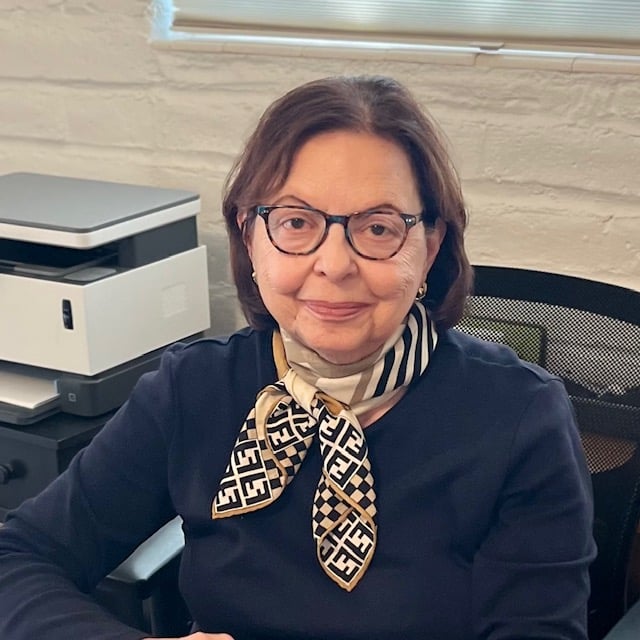
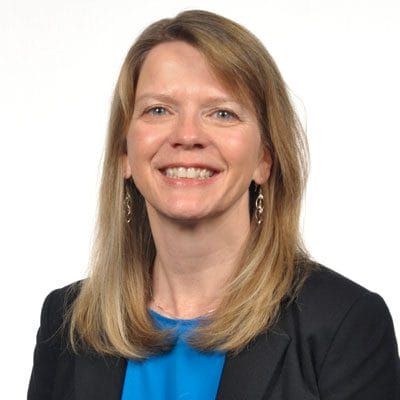
Mirta Pagnucci
A lifelong passion for languages
Pagnucci’s first language was Italian, and her need to master English at a young age sparked a deep appreciation for how languages work and connect people. By the time she reached college, she had studied Latin and French and decided to major in English and French to strengthen her knowledge of both.
After graduating, Pagnucci started her career in the classroom, teaching English and French in Wisconsin. While she loved languages, the realities of classroom management as a new teacher were challenging. So, after a few years, Pagnucci decided to return to graduate school to study comparative literature, allowing her to combine her love of language, literature and culture.
Ultimately, this path led her to pursue a PhD in Italian, with significant coursework in French. During this time, Pagnucci taught at high schools and universities across the country, led AP language programs and facilitated summer study abroad programs in France and Italy. However, one of her most formative experiences came through continuing education.
Rediscovering language learning at UW–Madison
After retiring, Pagnucci returned with her husband to Madison. She had stepped away from teaching full-time, but had found herself missing the classroom and being a language learner. This longing led her to discover the UW’s Continuing Education Languages program, where she decided to enroll in a few Spanish courses.
“I loved it,” she said. “I took Spanish 1, 2, 3 and 4, joined two Spanish book clubs and was looking forward to Spanish 5.”
As a student, Pagnucci appreciated that not all of the learners in the noncredit Languages program were traditional college students. While going back to college can seem daunting, that shared context created a strong sense of community, collaboration and support for Pagnucci.
Continuing Education Language classes are also intentionally small, allowing for more meaningful interaction. Compared to large lectures, only a handful of students enroll in each course section. Students often work in pairs or small groups, engaging in everyday conversations and interviews, and speaking entirely in the target language after reviewing key concepts and lessons beforehand. Grammar, vocabulary, culture and connections are all taught together, reinforcing real-world language use instead of memorization or tedious drills.
“What’s special is that students do most of the speaking,” Pagnucci explained. “Teachers are there to guide, encourage and give positive feedback, but the focus is on the students’ immersion and connection.”
Returning as an instructor
By taking Spanish courses, Pagnucci became increasingly interested in the Language program’s curriculum and instructional approach. So, she reached out to the program’s coordinators to inquire about teaching opportunities. With her extensive background in teaching languages, the transition from learner to instructor was seamless.
Today, Pagnucci teaches Italian 1 and 2, as well as some French courses, through Continuing Education. She describes the role as flexible, fulfilling and rewarding.
“It’s a part of who I am,” she said. “Teaching languages isn’t just a job, but it is a hobby.”
Pagnucci also values the program’s responsiveness to student and instructor feedback. The courses are continually revised based on the students’ input, and instructors work together to improve the materials and teaching strategies.
“It’s a well-designed program, and it keeps getting better,” she noted.
Teaching with empathy and encouragement
Pagnucci’s first experiences learning English strongly influence how she teaches today. She started out as a hesitant learner, so she understands the feat that many students face when speaking a new language. She makes it a priority to forge a supportive and forgiving environment where mistakes are encouraged.
“We are all human,” she said. “You’re bound to make mistakes, and mistakes are always forgiven. You’ll always have the chance to correct them.”
She also encourages students to diversify their learning resources, from trying out language apps to watching films and TV shows in other languages. Exposure, curiosity and consistency are all crucial in building confidence and fluency.
Pagnucci’s language journey is far from over. She hopes to keep improving her Spanish and dreams of spending some time in a Spanish-speaking country, hopefully convincing her husband to learn with her as well. She also remains involved in language assessment programs, although teaching remains her favorite role.
For anyone considering taking a language course through the Division of Continuing Studies, her advice is simple: Just try it.
“If you don’t connect with one class, try another teacher,” she said. “A good teacher makes all the difference. Language learning should feel encouraging and engaging. Most people don’t stick it out if they don’t enjoy it.”
Explore language learning
UW’s Continuing Education Languages program offers courses in multiple languages for adult learners seeking personal enrichment or professional development. Courses emphasize communication, cultural understanding and community — and no prior experience is required.
For questions or additional information, contact Christopher Moore, learning experience coordinator, at christopher.moore@wisc.edu.

Post written by Jakob Moe.
Published on Dec 30 2025
Last Updated on Jun 12 2026
Categories: Continuing education, News
Tags: adult learners, languages, personal enrichment, professional development
