
Returning adult students succeed with resources, support

Being a student at any age is a challenge, but returning to college as an adult with a job, caretaking roles and other responsibilities requires a special kind of balancing act.
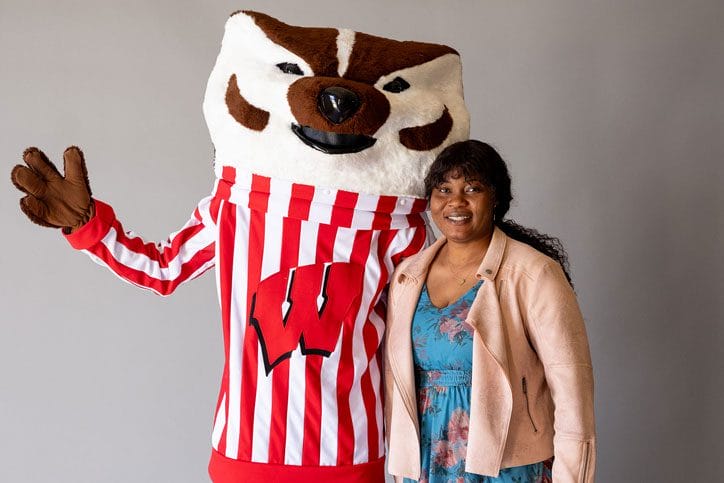
Leslie Wright knows this all too well. After an attempt at college in the 1990s, she left and later earned her associate degree. Wright entered the workforce but stepped away to raise children. Through volunteer work and as a school board member in Oregon, Wisconsin, she saw a need for mental health support in schools. She overcame obstacles to go back to school, and she’ll finish her bachelor’s in psychology this summer.
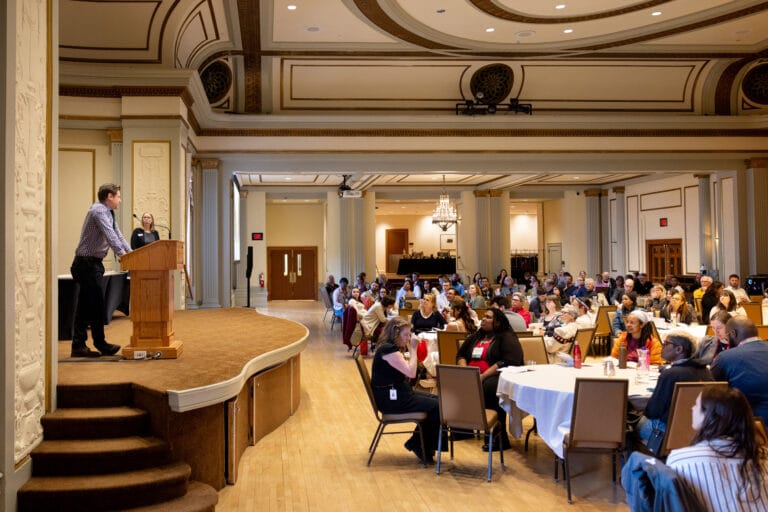
Each spring, the Division of Continuing Studies at UW–Madison recognizes dedicated, skillful learners like Wright, one of this year’s returning adult student award winners, at our Celebration of Outstanding Adult Students. Here are some insights from Wright’s journey that might inspire others to consider pursuing their educational dreams.

Seek financial assistance. “Determining how to pay for school was one of the largest obstacles to my return,” Wright said. But she added that the financial aid office at UW–Madison was instrumental in helping her complete the FAFSA, answering questions and guiding her toward scholarships. Ultimately, she qualified for Bucky’s Pell Pathway, designed to assist Badgers from low-income Wisconsin households pay for college. “This support made it possible for me to continue my education without compromising my family’s stability,” she said. Don’t hesitate to reach out to your school’s financial aid office; they may have resources you hadn’t considered.

Pursue a passion. In her work on the Oregon school board, Wright saw data and first-hand accounts of rising mental health concerns among students and staff. With this realization, and personal experiences from her own family, she felt drawn to help. This drive fueled her commitment to finding a way to balance family life, community commitments and academics so that she could fully realize her goals of contributing to better mental health in schools.

Find support. Perhaps the most critical ingredient in a successful return to school is a support system. For Wright, that included her husband and sons, who provided emotional and logistical support at home. But that support extended to include campus resources, such as advisors, career services, professors and teaching assistants. “These resources have not only supported my academic progress but have also strengthened my confidence as I plan my next steps,” she said. Returning adult students can also take advantage of tutoring services, libraries, campus disability offices and other units as needed. Don’t go it alone.
With continued support, Wright will start the Clinical Rehabilitation Counseling master’s program at UW–Madison this fall. She added, “My decision to return to school was shaped by community need, personal conviction and the encouragement of those around me.”
Going back to school is not easy, but it’s possible. And the rewards can be worth the effort. If you’re considering a return to college as an adult student, contact the Division of Continuing Studies at UW–Madison or your local college office for more information.
The Lifelong Learner is a monthly feature written by UW–Madison’s Division of Continuing Studies staff. Anne Niendorf, an academic advising manager, can be reached at anne.niendorf@wisc.edu. Get learning opportunities delivered to your inbox by subscribing to the Lifelong Learning newsletter.

Post written by Anne Niendorf. Co-authored by Lisa Bauer.
Read the post on the Wisconsin State Journal.

Published on May 11 2026
Last Updated on Jun 01 2026
Categories: News, University Special Student Services
Tags: adult learners, bachelor's degree, resources and tips, scholarships & financial aid
