
5 ways to explore careers, build resumes this summer

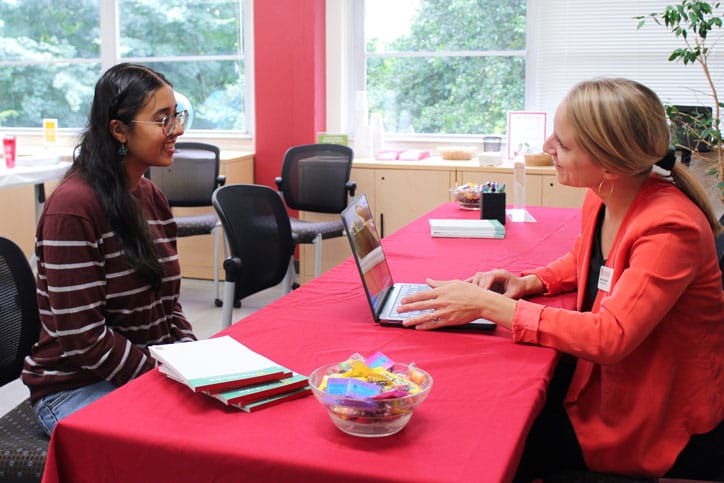
CALS Career Development Manager Paige LaPoint meets with students at a drop-in resume review in the Microbial Sciences building. Photo: Michael King.
Welcome to Summer Term 2026! Whether you’re staying on campus to enjoy the best of Madison or joining us virtually from across the globe, we are thrilled to have you as part of our Badger community this summer.
Summer Term is about more than just checking off requirements; it’s a season of possibility and personal growth. As you settle into your summer routine, you may find yourself with a little time and mental space to plan for what comes after your degree. Whether you’re looking to polish your resume, develop transferable skills or investigate potential job paths, Summer Term can be a good time to build professional momentum without the busy pace of the fall or spring semester.
The best part? You don’t have to navigate these questions on your own. UW–Madison career centers remain fully staffed throughout the summer, offering career counseling, workshops and digital tools both on campus and online, ensuring support is available wherever your summer takes you.
Here are five ways career advisors suggest you can spend some summer hours contemplating your career — and taking meaningful steps toward your goals.
1. Peruse online tools
Make your first online stop at UW–Madison’s Career Services site. Here you’ll find information on your school or college’s career office as well as career events and the valuable Career Exploration Center (CEC), where you can learn how to use a variety of career tools to explore your interests.
“Online career tools can be useful for students who are trying to learn about all the possible options that are out there,” says Michelle Jackson, director of the CEC. “Of course, no singular tool is going to tell you exactly what you should do after college, but they can offer new ideas and new ways to think about options.”
At the CEC site, you can also learn about ways to gain experience on and off campus to discover more about careers and yourself. This could include volunteering, finding job and internship opportunities, joining a student organization or participating in undergraduate research.
In addition, each school or college career services office will have different resources; for example, the School of Human Ecology offers career guides tailored to its undergraduate students.
Of course, LinkedIn is the mother of all online tools. With LinkedIn Learning – a free resource for all students – you can watch videos or take short courses about optimizing your profile. Follow your school or college’s LinkedIn page as well.
Don’t forget, Handshake is more than a job board where employers go to recruit. You can also find internships, career events and connect with alumni or get personalized job recommendations based on your major, interests and more.
Finally, the Department of Labor has some useful online tools. O*NET OnLine offers a large repository of occupational data including skills, competencies and job requirements. You can even take a skills or values inventory. Career One Stop allows you to explore different types of careers and find out what’s in demand.
2. Review that resume
Your resume may feel a little sparse if you don’t have a lot of job experience yet, and that’s okay. Focus on building up the education section and tease out transferable skills — like communication and leadership — you’ve learned from your jobs and other experiences. (Read more on skills below.)
Make sure your resume is written and designed well, too. Be sure to proofread it and have someone else look it over for you. A strong resume uses simple fonts, clear organization and action verbs.
Check out your school or college’s career site again to get help with writing your resume. LinkedIn Learning has resume-writing tools as well, and UW–Madison’s Writing Center has a web page of helpful resume writing tips.
3. Flex your networking muscles
As temperatures rise this summer, how about firing up your networking game? Summer could be a good time to practice connecting with professionals and alumni in your areas of interest.
Informational interviews are one way to make important connections and learn more about careers. The College of Letters & Science SuccessWorks has a great guide to informational interviewing.
You can also plan a job shadow, allowing you to follow and closely observe someone in a profession that interests you. Maybe your neighbor is a CPA or your aunt works at an engineering firm. You can even look for opportunities to have informal career chats.
“More than ever your radar should be very attuned to conversations that may spill over into careers, even at a family gathering,” says Matt Nelson, career advisor with the College of Engineering Career Services.
Most importantly, take advantage of that special status of being a Badger. More than 500,000 Badger alums work in a wide variety of jobs all over the world. You can make connections through Handshake or LinkedIn. Spend time searching under the “Alumni” tab of the UW–Madison LinkedIn page, where you’ll find thousands of Badgers and their career paths.
Aren’t sure what to say when you reach out to alumni?
“Ask them about what skills they use, what they like and find challenging about their role and industry, and what advice they might have for you,” says Andrea Boulanger, director of Career Advising & Communities at SuccessWorks. “Alumni love talking to students!”
4. Strengthen significant skills
Internships are great, but if you didn’t score one this summer, that’s perfectly okay.
“An internship is not going to make or break your career,” says Kristina Vack, director of College of Agricultural & Life Sciences (CALS) Career Services. “There are so many different things to do to get a great experience.”
Consider the volunteer or job activities you’re involved in this summer and the skills you’re picking up or exercising in those experiences. Are you helping to lead a team or project, using communications skills, analyzing problems? Those are all competencies you can list on your resume and talk about with potential employers.
Read more about these “soft skills” (aka “transferable skills”) and take note of how you’re developing them over the summer months. You could turn what might seem like a run-of-the-mill job into a resume-builder.
“Students who return home to do a part-time job – maybe in retail or restaurants – can also seek out additional responsibilities,” says Jamie Mickelson, director of Career Engagement at the Wisconsin School of Business. “Students who work for a small business, for example, could shadow people in the accounting department.”
5. Connect with your career services office
Your friendly career services advisors are ready and willing to help you all summer – and they often have more time during Summer Term. All offices have both in-person and remote appointments available. Find the career office in your school or college.
“We want you to know you’re not alone,” says Paige LaPoint, career development manager at CALS. “We can help with resumes, interviews, negotiating salaries and more. If you have a question or just want to talk, let us know.”
Career Exploration Center advisors are also available to support undergraduate students who are undecided about their academic and career objectives.
“Majors don’t always determine a career, and a student’s interests may shift over time, which is why meeting with a CEC career advisor can help provide clarity and direction,” Jackson says. “They can help answer questions like: How do I know if a major is a good fit for me? How do I choose classes if I am not sure of my major? I have some career ideas, but how do I pick a major to achieve them?”
Pick one or two of these tips to focus on this summer, and you’ll be one step closer to understanding your interests and meeting your professional goals. (Bonus: Spending some time building skills and thinking about your career will give you a leg up for fall career fairs on campus!)
Ultimately, you can view career exploration as a time to look in the mirror and be proud.
“We are all unique human beings with different skills, interests, values and personalities,” Boulanger says. “Exploration of careers is not only looking into different career paths, but it’s also the exploration of self.”
This article has been updated from the original published on June 2, 2023, to reflect new information.
Visit the Summer Term website to learn more about designing a summer that helps you meet your goals. And don’t forget to use #MyBadgerSummer on your social media channels to let us know what you’re up to during Summer Term!


Published on May 08 2026
Last Updated on Jun 30 2026
Categories: News, Summer Term
Tags: advising, careers, education planning, resources and tips
