
Two learners support others through behavioral health education
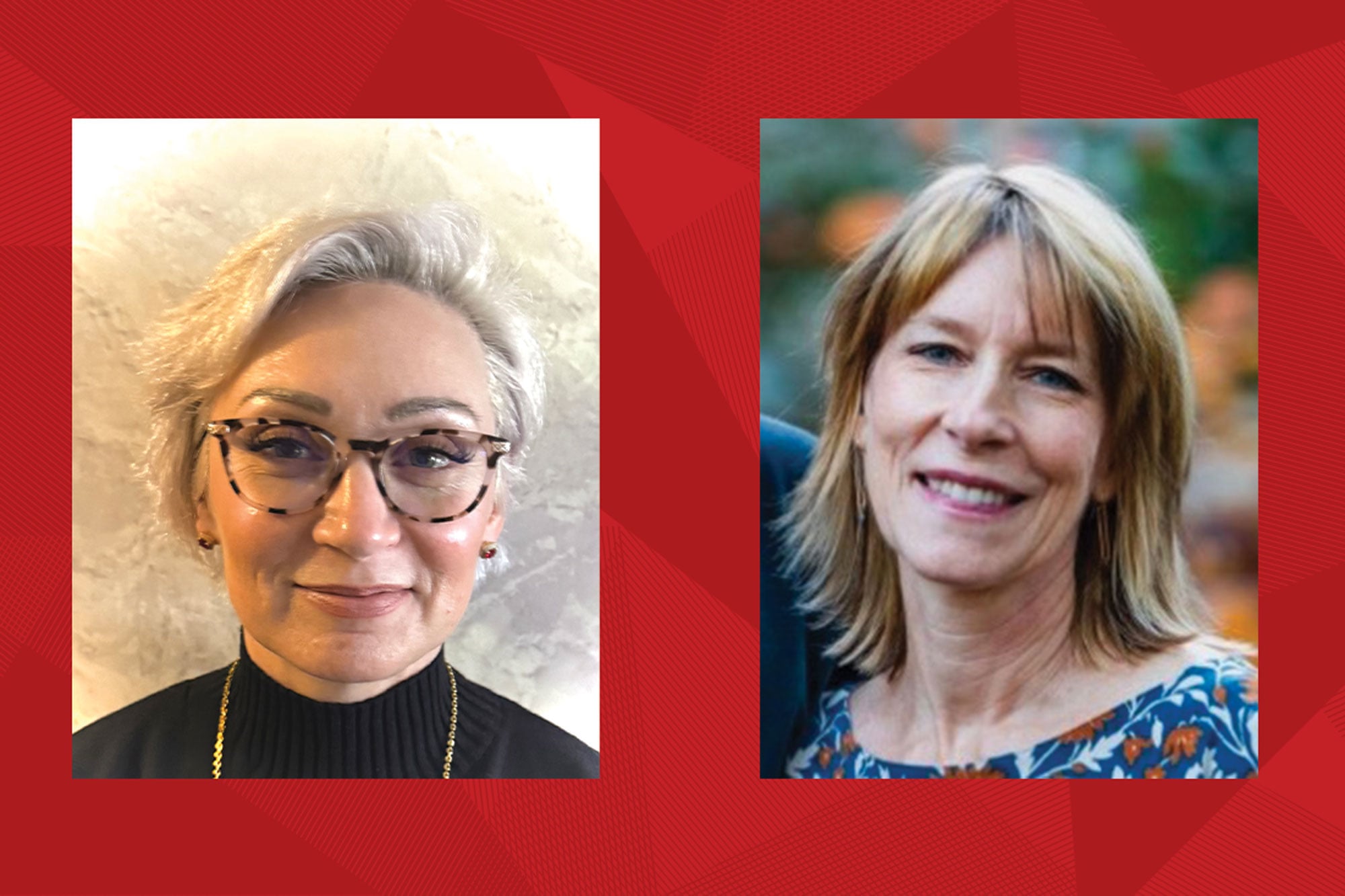
JessicaRae Rivera and Sarah Covert
When Sarah Covert enrolled in her first Motivational Interviewing (MI) course through UW–Madison Continuing Education, she wasn’t just thinking about her coaching clients. She was thinking about her children.
A longtime STEM faculty member turned leadership and retirement coach, Covert had spent decades in roles where giving advice was expected, even required. But as her children moved into young adulthood, she found herself wanting to communicate differently.
“I thought this evidence-based counseling approach, which focuses on supporting behavior change in a client, would improve my coaching practice, she explained. “I also hoped that MI’s nonjudgmental conversational techniques would strengthen my relationship with my children as they transitioned from their teenage years to young adulthood.”
That desire — to support others with more empathy, clarity and evidence‑based tools — is something many learners bring to UW–Madison’s Continuing Education programs in behavioral health.
A learning community for helping professionals
UW–Madison Continuing Education offers a wide range of behavioral health programs designed for clinicians, coaches, social workers, educators and leaders who want to deepen their skills. From MI and trauma‑informed care to resiliency training and ethics, these courses emphasize hands‑on learning and practical approaches grounded in research.
“Our goal is to meet learners where they are and help them build skills they can use immediately,” says Erin Schuler, director of Behavioral Health programs. “Whether someone is supporting clients, patients, colleagues or their own family members, we want them to feel more confident and equipped to help others grow.”
For Covert and JessicaRae Rivera, two professionals working in very different fields, that mission resonates deeply.
From scientist to coach
When Covert first learned about UW–Madison’s continuing education courses in Motivational Interviewing, she was completing a coaching certificate at the University of Georgia and eager to expand her skills with research-backed approaches.
“As a former STEM faculty member at an R1 research university, I felt it was important that my coaching practice be rooted in approaches supported by evidence,” she explained. Motivational Interviewing, a person-centered counseling style used to strengthen an individual’s commitment to change, emphasized a strong research foundation and alignment with core coaching principles. For Covert, it felt like a natural fit.
By enrolling in UW–Madison behavioral health courses in Motivational Interviewing, Covert found exactly what she was looking for: practice, feedback and transformation.
During her coursework, she valued the opportunities to build reflective listening skills, something she initially found challenging. “The courses’ attention to detail and hands-on learning allowed me to turn the corner on this challenge,” she said. “By the end of the three‑course series, I had established some solid skills as a reflective listener. I still rely on these today as a coach.”
Perhaps most meaningful was learning how to shift from advice‑giver to guide, an essential mindset in coaching. “Breaking this impulse was very difficult for me — until I studied MI,” Covert said. “I learned some simple strategies for maintaining the client’s autonomy and offering my input — only when really necessary. Having these strategies in my coaching toolbox considerably softened my urge to give advice, and as a result, I can better maintain a client-focused mindset when working as a coach.”
The strategies she learned not only strengthened her coaching practice but also enriched her communication with her young adult children. “I know they both appreciate the fact that mom tries (at least!) to give them room to solve their own problems, while remaining engaged and supportive.”
Leading with empathy in healthcare
For JessicaRae Rivera, an RN manager of surgical services in Franklin, Wisconsin, continuing education has always been part of her professional rhythm. “I am always looking for continuing education and seeking out opportunities for learning,” she said.
Rivera has taken several behavioral health courses, including Motivational Interviewing and Trauma‑Informed Leadership, her favorite so far. “It was a great class,” she said. “I was able to relate to it and take away many aspects to use in my own leadership practice.”
The skills she’s gained have shaped how she supports her team and interacts with patients.
“The skills I have taken away are more centered on meeting people where they are at in life, remaining empathetic and non‑judgmental,” she explained. “Sometimes all you need to do to help is listen.”
For a leader in a fast‑paced healthcare environment, those skills make a tangible difference.
Learning that strengthens communities
Both Covert and Rivera emphasized how UW–Madison’s Behavioral Health programs helped them grow not just as professionals but as people.
Covert recommends MI training to those working in helping professions. “I encourage anyone who would like to support a client’s or patient’s motivation to change to enroll in UW–Madison’s MI courses.”
Rivera appreciates the breadth of behavioral health offerings: “I appreciate that there is such a large and diverse amount of classes available.”
Their stories reflect what so many learners discover: When you invest in your ability to communicate with empathy and clarity, you strengthen every relationship you touch at work, at home and in your community.
To discover upcoming courses in Motivational Interviewing, trauma‑informed care, ethics and more, visit the Behavioral Health programs page at UW–Madison Continuing Education.

Post written by Jill Schaefer.


Published on Mar 05 2026
Last Updated on May 11 2026
Categories: Continuing education, Student stories
Tags: behavioral health, online, professional development, workforce
