
How Badger Precollege helped launch a future physicist
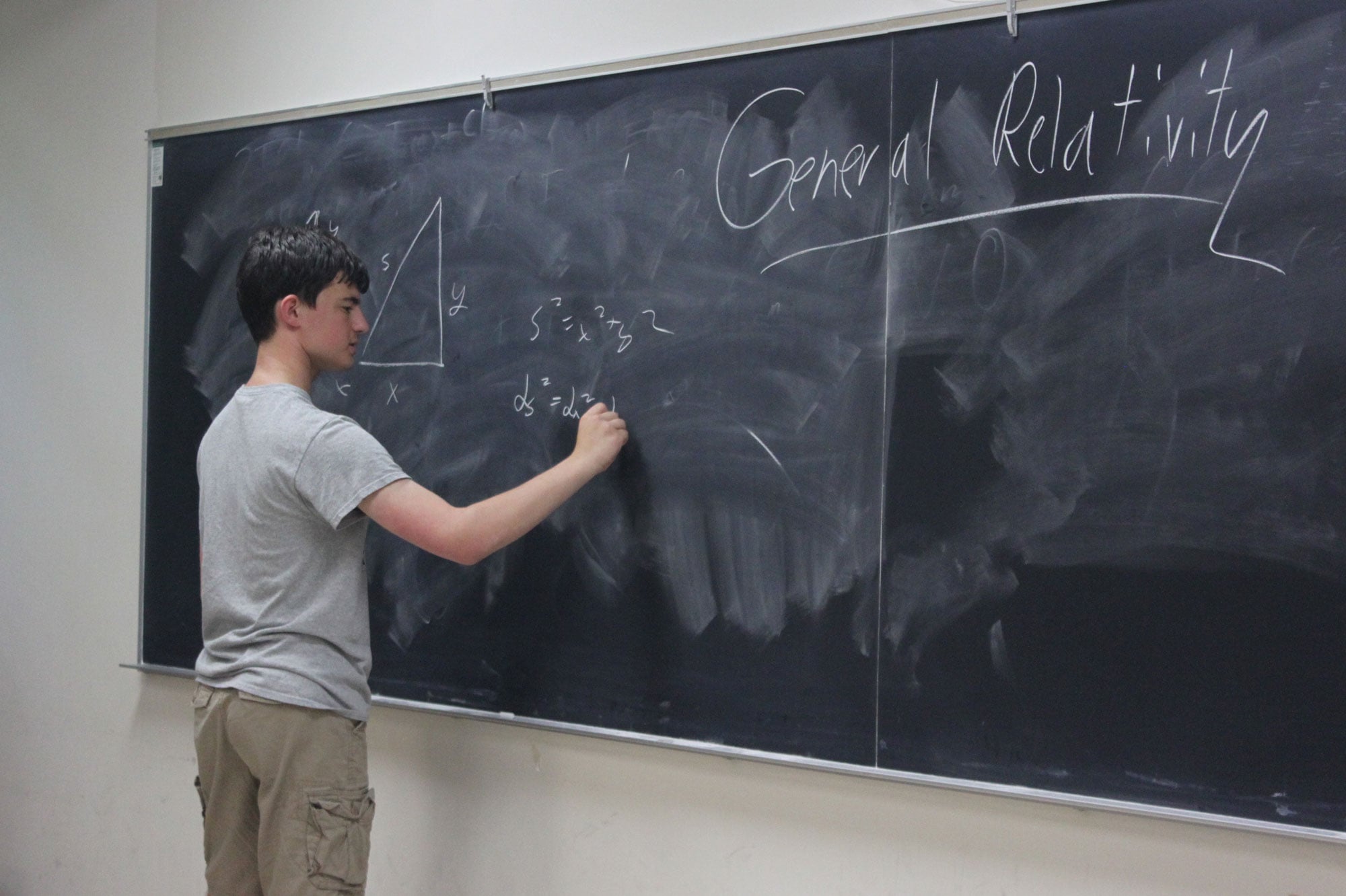
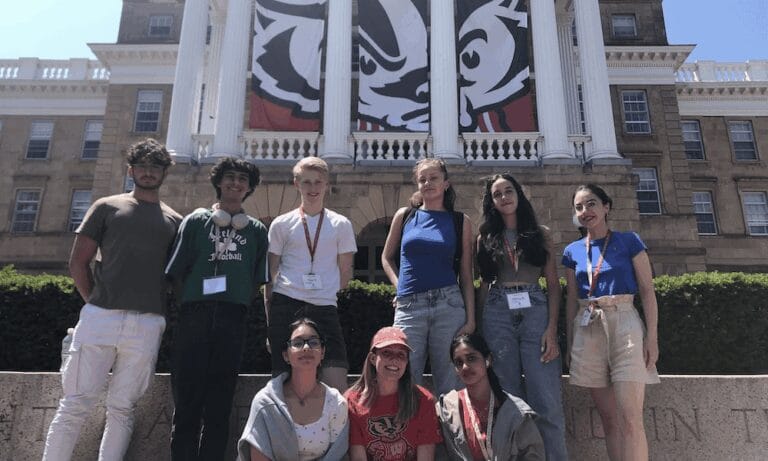
Nathan Wagner’s early interest in physics stemmed from his 2019 experience, shown here, in the Badger Precollege course, Physics of the Impossible.
Last spring, the Astronaut Scholarship Foundation announced Nathan Wagner as one of 74 undergraduate students from 51 universities and colleges as a recipient of its prestigious Astronaut Scholarship. Founded by The Mercury 7, the group of astronauts selected to fly spacecraft for Project Mercury, the scholarship supports some of the nation’s very best science, technology, engineering and math college students.
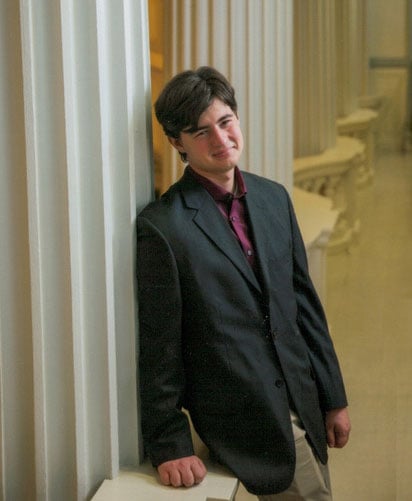
Wagner is a second-semester senior at the University of Wisconsin–Madison, where he’s majoring in physics and mathematics. But long before he won an Astronaut Scholarship, he began his journey in advanced physics research as a high school student at UW–Madison’s Badger Precollege.
Early academic curiosity
Wagner attended Madison West High School in Madison, WI, where he developed a strong passion for math and science. In middle school, he was very focused on studying math but knew little about physics. During the summer after eighth grade, Wagner attended his first Badger Precollege program.
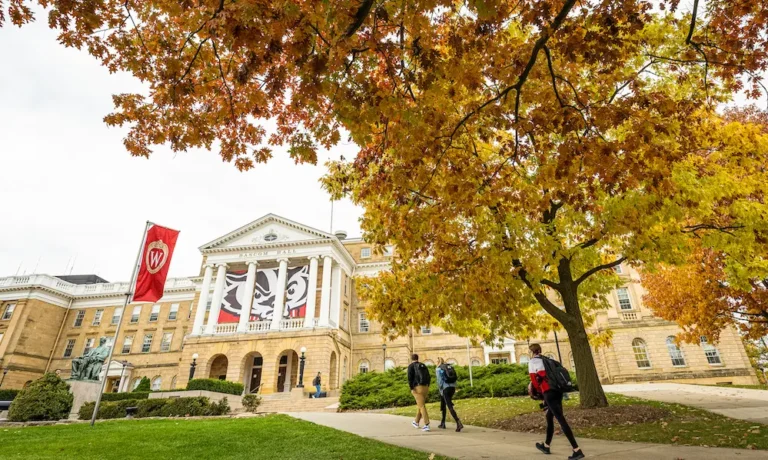
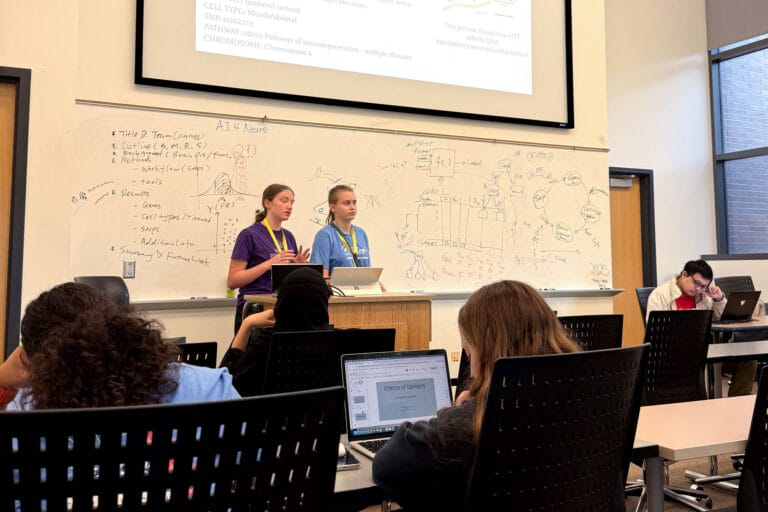
Badger Precollege offers an array of engaging academic, STEM and arts programs for students in grades 4–12. Along the way, students develop skills that enhance college-readiness. Classes are offered virtually or in person on the UW–Madison campus and taught by experienced instructors and professors. Students can explore programs in music, law, business, physics and many other subjects. Financial assistance is available for most programs.
Thinking about college early on, Wagner knew that UW–Madison’s Badger Precollege program would prepare him for learning more independently. That summer, he lived in UW’s residence halls as he delved into new areas of math and science. While taking that leap was initially intimidating, Wagner found that learning alongside equally passionate students helped build a strong and supportive community. He made many friends, some of whom he still keeps in touch with today.
The high quality of Badger Precollege programs kept Wagner engaged and coming back for more. Over the course of four summers, he participated in a half dozen Precollege sessions, in courses ranging from chemistry and math to music and critical reasoning.
Physics of the (not so) impossible
While Wagner knew he wanted to pursue a math-related field, he was less familiar with physics. In 2019, he decided to take Physics of the Impossible, a course offered through Badger Precollege’s Accelerated Learning Program (ALP) that covered not just the basics of physics but also the applied techniques used by real physicians and researchers. Wagner also realized that many physics concepts were connected to math. This realization helped bridge his love of math with an interest in the sciences — and launched a new career trajectory.
“Physics of the Impossible gave me an opportunity to push myself in ways that I could not otherwise,” Wagner said. “I learned concepts that you would see in an intermediate mechanics or quantum course and ran through the different subjects you would encounter as a physics major.”
While his precollege learning experience was rigorous, Wagner had a strong, supportive environment. He had direct access to his precollege instructors, staff and peers. Using those resources, Wagner could ask detailed questions and learn the concepts more deeply. Much of the course emphasized problem-solving, sharpening the skills that he uses as a college student and researcher today. With the right tool kit, Wagner now had the confidence to pursue physics seriously.
A seamless transition to college
“Badger Precollege really helped with the experience of learning struggle early on and gave me a head start in college, so I didn’t have to figure out everything on my own,” Wagner recalled.
Going into college, he felt prepared. Having had a positive experience with physics in high school, he knew he wanted to double-major in physics and mathematics. Not only did he feel prepared to take high-level college courses, but, thanks to his Badger Precollege experiences, he also felt comfortable communicating with his professors and TAs. He soon earned an Undergraduate Student Research position with the UW–Madison Department of Physics.
Learning to struggle academically and developing persistence are skills that many college students gain later in their college experience. However, Wagner was able to develop his skills much more quickly.
Early college experiences also helped him land various scholarships, like the prestigious Goldwater Scholarship for student researchers, which he was awarded in 2024. He looked for scholarships in the Wisconsin Scholarship Hub and sought help from the University’s Undergraduate Research Scholars (URS) Program. In 2025, the URS helped Wagner apply for the National Astronaut Scholarship, suggesting he would be a good fit after winning the Goldwater Scholarship.
Upon winning the Astronaut Scholarship, Wagner presented at the Astronaut Scholarship Foundation’s August 2025 Innovators Symposium & Gala in Houston, Texas, where he toured NASA facilities and met other scholarship winners with similar interests. What stood out to him was that his fellow scholars were not just studying physics and math, but came from a range of fields, from medicine to engineering.
Wagner found interdisciplinary networking to be very insightful and helpful, not only for hearing about other students’ research, but also for exploring post-graduation opportunities. He also presented his research and received feedback from people “who had made it” in the field of astrophysics. Astronaut scholars receive regular and direct mentorship from these and other professionals.
“The connections with alumni and scholars from the industry can last for many years,” he said. “They can teach you the lessons they have learned along the way to making it, which is invaluable.”
Through networking at the event, Wagner also appreciated the opportunity to sharpen his skills in public speaking and research communication, both of which are important in the professional world.
Nathan’s advice
Wagner credits his early exposure to academic challenges and research for building his confidence for later competitive opportunities. Without Badger Precollege, he says he might not have known about some of these opportunities.
For students considering Badger Precollege, Wagner suggests taking classes they are genuinely curious about.
Whether the classes seem challenging or distant, support systems are in place to help students ask questions and sharpen their academic skills. Precollege is also a low-risk way to experience college, making the transition from high school to college smoother and less intimidating. Embracing challenge helped Wagner get to where he is today, and he urges future college students to follow in his footsteps.
What’s next for Wagner?
After this semester, he plans to pursue a PhD in Physics and later go into research or academia. Thanks to Badger Precollege, he has a great foundation from which to continue building a remarkable education and career.

Badger Precollege is now enrolling for summer! Visit the Badger Precollege website to learn more, or contact info@precollege.wisc.edu.

Post written by Jakob Moe.
Published on Feb 16 2026
Last Updated on May 21 2026
Categories: Badger Precollege, Student stories
Tags: college preparation, high school, scholarships & financial aid
