
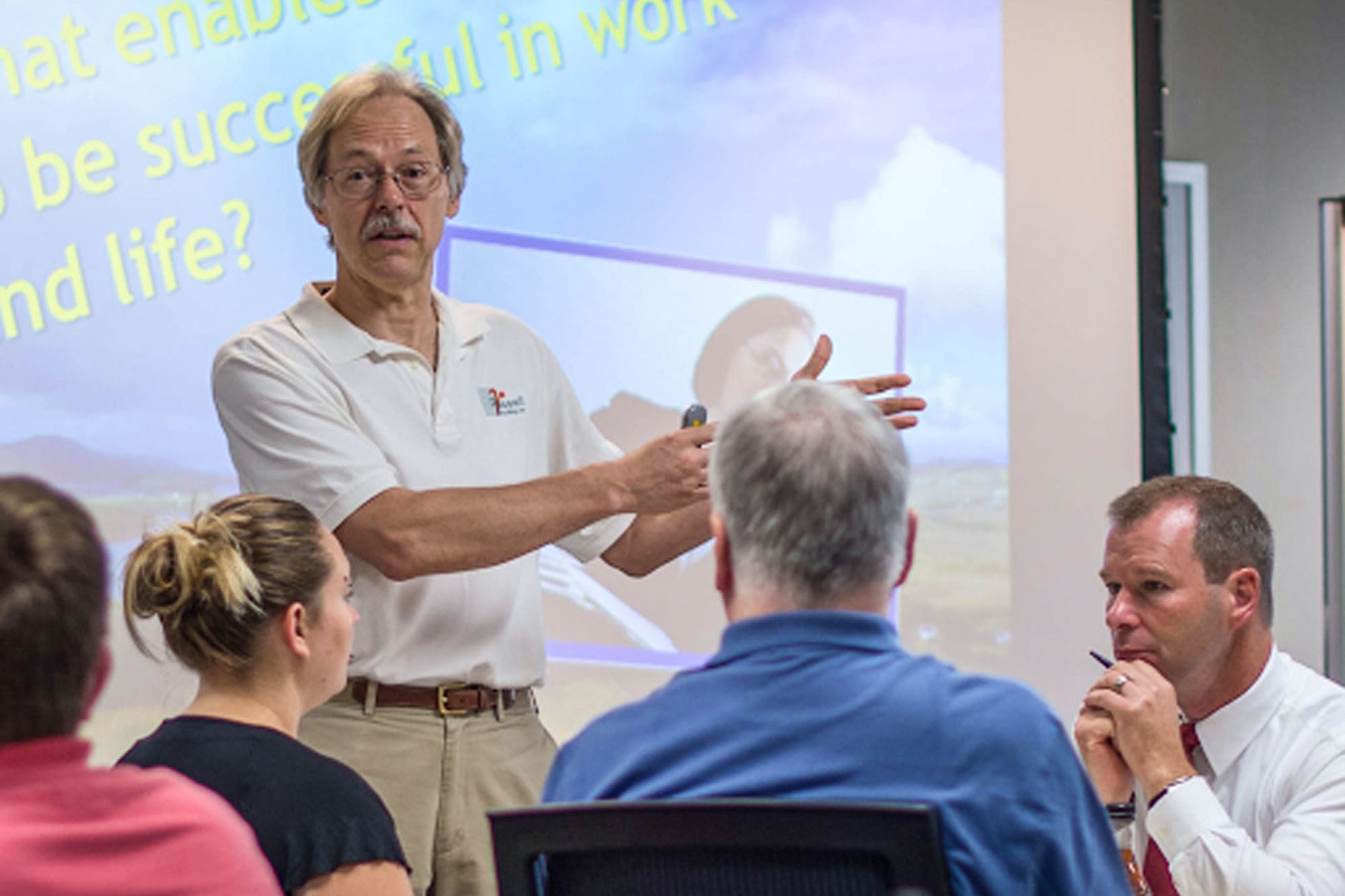
A masterclass in leadership: Instructor Jeff Russell’s 30-year journey
After more than three decades of teaching, consulting and shaping leaders across industries, Jeff Russell is closing a chapter.
Since 1990, Russell has been a key instructor with the Leadership, Management & Workplace Skills (LMOWS) program at the UW–Madison Division of Continuing Studies (DCS), helping thousands of professionals develop skills necessary to lead, adapt and succeed in complex workplace environments. In addition to teaching, Russell wrote 11 books and worked with a variety of organizations – from small businesses to McDonald’s.
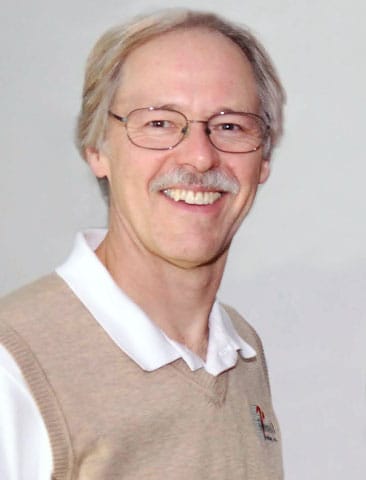
His legacy reflects not only an accomplished career, but also the lasting impact of high-quality instruction in continuing education.
“Jeff is one of the most outstanding instructors I’ve worked with,” said Laura Page, who previously led leadership and management programming for DCS. “He brings together academic preparation, decades of experience and a true mastery of how adults learn.”
Russell’s path into leadership development began with his own early career challenges. “I’ve been a supervisor, leader and employee,” he said. “And early on, I had to figure out a lot of things on my own.”
Without solid guidance, Russell learned through experience, frustration and adversity. His journey inspired him to help other developing professionals navigate the workplace more effectively.
After graduate school, Russell launched his consulting career and began teaching with DCS. What followed was more than 30 years of helping professionals find clarity, confidence and direction in their work.
Defining and building skills, collaboratively
The core principle of Russell’s teaching is simple but often overlooked: leadership begins with self-awareness.
“The biggest hurdle that leaders face is the inability to know what they’re doing well and what’s not working,” Russell said. “You can read all the books and attend all the workshops, but if you can’t look in the mirror and say, ‘This is what I need to work on,’ it’s wasted effort.”
Building from that foundation, leadership is about relationships: how individuals engage with peers, supervisors and direct reports in ways that foster trust and shared success.
Russell emphasizes empathy, honesty, discipline and authenticity as essential traits, but he also encourages leaders to think collaboratively: “As a leader, the more you rely on that title, the less effective you become. It’s not about the authority. It’s about the relationships.”
Page noted that Russell’s ability to connect big-picture concepts with practical application is part of what sets him apart. With a master’s degree in industrial relations and decades as an independent consultant, he brings technical and lived experience into the classroom.
“I bring tools, resources and examples,” he said. “But they bring their experience, questions and curiosity. Together, we create a learning partnership.”
This approach is especially effective for LMOWS learners, many of whom are experienced professionals seeking to sharpen leadership skills rather than learn from scratch.
Top-notch instruction across programs
Russell is one example of instructional excellence in Continuing Education at DCS. Across continuing education programming at UW–Madison, instructors bring academic expertise and deep, real-world experience, key factors in their effectiveness.
“We benefit from the deep commitment of high-quality instructors, many of whom have been teaching with us for years,” said Melinda Verdone, assistant director of program development. “This consistency gives us the confidence that our learners will have a positive and impactful experience, knowing they are guided by seasoned professionals who deeply understand their needs.”
For Russell, that real-world experience comes from consulting with organizations of all sizes — nonprofit and for-profit. According to him, leaders often feel limited in their ability to drive change in large, complex organizations. Instead of focusing on sweeping transformation, he encourages professionals to start within their own sphere of influence.
“The key question becomes: What can you do within your own sphere?” he said. “When you become more effective there, your influence begins to grow.”
Page emphasized that Russell’s effectiveness is also rooted in his formal training as an instructor. Through leadership roles in professional organizations, he developed advanced skills in facilitation. His unique teaching styles include designing role plays and leading discussions, as well as handling difficult situations and translating concepts into real-world application.
“What makes our courses so impactful is the extensive practical knowledge our instructors bring,” Verdone said. “They share examples from their roles as consultants and executives when teaching concepts like leading change or strategic thinking. You are learning from professionals who have been exactly where you are.”
For learners like Hanna Blazel, that approach left a lasting impression. “Of the many trainings I have done in my 25+ year career, (Russell’s) stands out,” she added.
‘Keep learning’
As Russell steps away from teaching at DCS, he reflects on the evolution of leadership training. One of the most significant changes is a growing awareness of organizational culture.
“You can teach all the tools for strategic planning or managing change,” he said. “But culture ultimately determines how people behave. If the culture doesn’t support it, those tools won’t stick.”
He has also seen a shift in learners. Today’s professionals bring deeper experience, complex questions and a strong desire to engage critically with the material. “That challenges me as an instructor,” Russell said. “It pushes me to keep learning and improving what I teach.”
Page said that engaged commitment defines Russell’s career: “He’s a lifelong learner. He reads, writes, attends conferences and is constantly evolving his material.”
She also mentioned the quality of all DCS instructors: “Instructors have to be passionate and highly skilled. There’s a strong evaluation process. Many courses require instructors to adapt content based on specific needs of each organization. That takes deep expertise and strong listening skills.”
Looking ahead, Russell plans to stay involved in select teaching and consulting roles while dedicating more time to travel and volunteer work.
For those just beginning their leadership journeys, he added, “If your goal is simply to become a leader, that’s the wrong aspiration. Your goal should be to have a vision that others are willing to follow.”
Ultimately, Russell’s career and decades with DCS illustrate a broader theme in professional development: Impactful learning is driven by experienced instructors who not only teach leadership, but have lived it.
For thousands of LMOWS learners, that experience has made all the difference.
The LMOWS program offers noncredit professional development courses designed for working professionals looking to strengthen leadership, communication and organizational effectiveness. For more information, contact Brittany Browning at bbrowning2@wisc.edu.

Post written by Jakob Moe.
Related Posts



Published on Apr 07 2026
Last Updated on Jun 01 2026
Categories: Continuing education, News
Tags: leadership, management and workplace skills, professional development
