
Studying psychoactive pharmaceuticals at UW–Madison: Q&A with alumna
The first master’s program for psychoactive pharmaceuticals in the United States started right here at the University of Wisconsin–Madison. UW–Madison’s School of Pharmacy offers the MS in Pharmaceutical Sciences: Psychoactive Pharmaceutical Investigation (PPI) as well as a PPI Capstone Certificate program — both fully online.
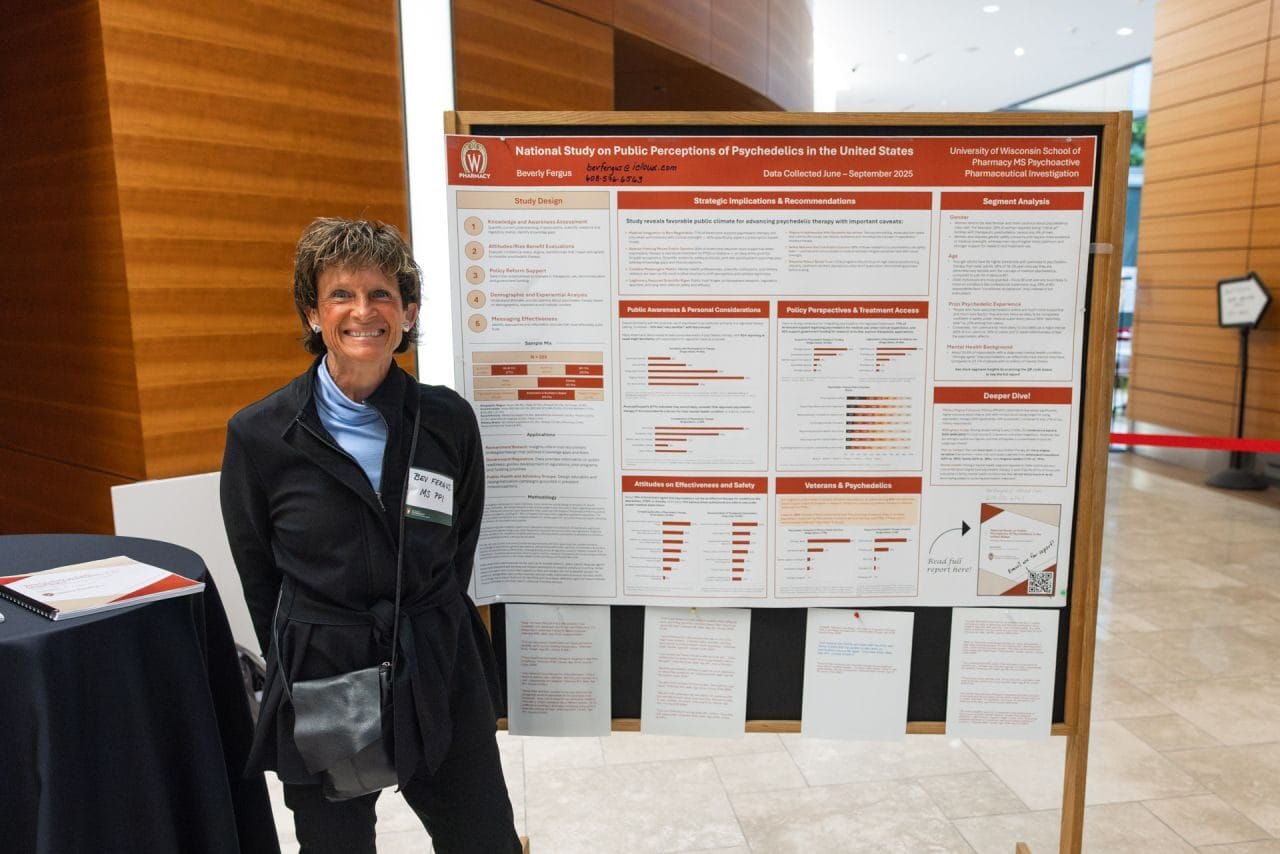
Bev Fergus
The program furthers graduates’ knowledge and experience in the field of therapeutic development and deployment of psychedelics, entheogens and cannabinoids, among other psychoactive substances.
Bev Fergus, a PPI MS alumna, answered a few questions about her experience in the program and what she took away from it.
What made you interested in the PPI program or psychedelic medicine and research in general?
I read about this program being the first graduate-level program for psychedelic medicine in the country. Around that time, I had Marine officer nephews who just got back from Iraq and Afghanistan, and one of them had lost two people in the line of duty while over there. Since he’s been back, he’s lost 37 people to suicide from PTSD. That really pushed me to say, “Obviously we need to help these people.”
I started giving talks to different organizations about the importance of these medicines and looked things up from the Department of Veterans Affairs. They said since 9/11, the military has lost around 7,000 military people to military operations, and in that same time they’ve lost up to 150,000 to PTSD suicide. And I’m wondering, why isn’t this plastered on all social media and the news?
I was interested in psychedelics for medicine when I started the program, but with each class, I became more passionate about it because I believe that it can help many people. We need to provide access to these medicines for people who really need it.
What has been your favorite course or experience while you were in the PPI program?
I had so many courses I loved, and every single course built on the previous one. Every professor was excellent and so was every class. We learned about the FDA, and we learned about the history of psychedelics and psychedelic medicine. By the end I feel like we had a well-rounded grasp of this whole industry and how we can move it forward.
Was there anything that surprised you while you were doing research on the public’s perception of psychedelics?
When we framed our questions in terms of military vets, which was, “Do you support the military having access to this?” 93 percent of people were supportive. When you ask that question about a general audience, they were less supportive. There’s very few people who aren’t willing to consider psychedelic medicine if it’s done in a medical framework, but they need to know it’s safe. Safety is a huge issue for everybody.
What are some common misconceptions that people have about psychedelic medicine, or just psychedelics, and do you think that has changed in recent years?
I think the biggest thing is people are worried that they’re dangerous, that they’re addictive. [There are] people who’ve been doing this safely for years, and there have been indigenous communities that have been doing this for thousands of years.
Once it’s legalized, my biggest concern, and my biggest passion right now, is accessibility. How are we going to get it to the people who need it the most? Military vets, homeless people, underserved communities, socioeconomic disadvantaged people. When you put this in the medical system, whether you have insurance or not, it will be expensive.
How important do you think education and public outreach are in advancing psychedelic medicine responsibly?
I think that’s really the only way that we can advance this. Outreach is so important because public outcry will eventually convince the people in charge that they need to approve these medicines. I think that’s critical in getting things further along.
The people that are in my program, both my fellow students, who are all researchers or doctors or educators, and my professors, are the people who are going to advance this field. They are the ones who are pushing it forward. I have professors with the FDA, I have professors in research. All of them are working with psychedelics in some form or another. That’s why I loved being in this program, because we’re in the middle of it, and our professors are taking these medicines to the next level.
How would you recommend students who are interested in research get started or build connections with faculty who will then push them to the next level?
I for sure would have them contact the people in the PPI program. We are really the first nationally accredited university with a graduate level program in psychedelic studies. It’s all here. This is a wonderful place to get started.
If you could go back and tell yourself one thing before starting the PPI program, what would it be?
I had no idea how fulfilling it would be. Because it’s an online program, you think that you’re just on your own. But we had Zoom classes every week, we had group projects, we were forced to get together with our peers. I have made lifelong friends within this program, and some of the professors I will stay in touch with forever. Even though it was online, I felt like we were together all the time. I knew who I was graduating with in May.
What tips do you have for prospective or current students?
I think that my tip is just do everything you can. They have speakers every month and there are always learning opportunities. Get to know your fellow students. There are a lot of students that are in Madison, and they get together regularly.
Is there anything else you would like to share?
I’m really convinced that the people in this program, the professors and the students, are going to be the ones that move this industry forward. They’re the ones that are going to make the changes and push for more research and approval.

For questions or additional information on the PPI program, contact Eric Buxton at eric.buxton@wisc.edu or visit PPI site.

Post written by Zoey Jiang.

Published on Aug 14 2026
Last Updated on Oct 02 2026
Categories: Professional Degrees & Certificates, Student stories
Tags: capstone certificate, master's degree, online, pharmacy
