
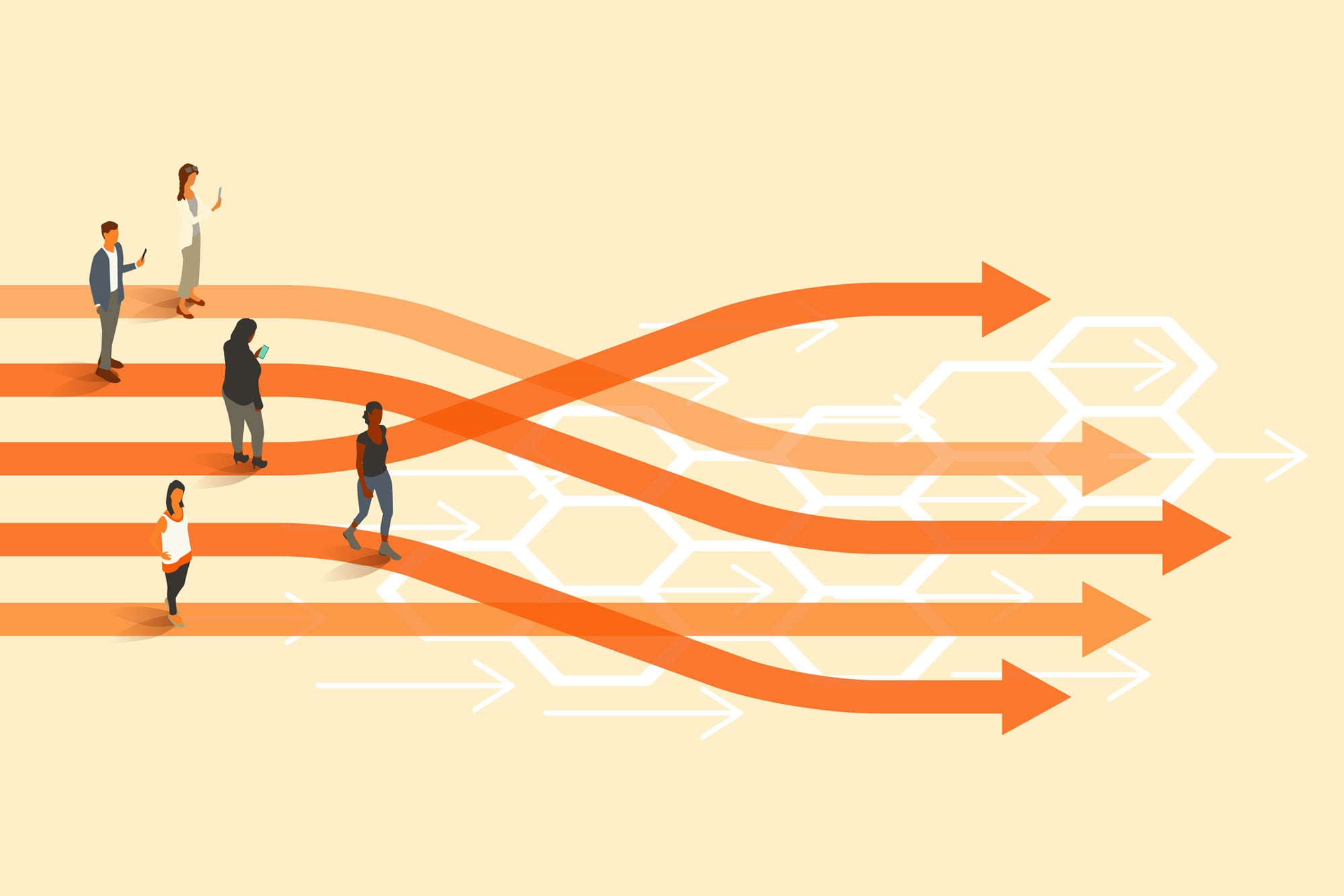
How to change careers later in life
Whether by choice or necessity, more workers are making career moves in their 30s, 40s and 50s.
The average age of career change is 39, according to the research firm Zippia. And even if you don’t switch professions, the Bureau of Labor Statistics reports that workers have about 12 jobs by age 55.
When you hear about midlife career pivots in the news, it’s often someone who quit their stable jobs with no backup plan and had overnight success. Headlines like these grab people’s attention, but they don’t tell the whole story.
For most people, changing careers is a journey that happens in fits and starts over several years. So, before you make a move, consider: Could you take a few courses while keeping your day job? Or, what if a microcredential could help you change roles within your company?
Here are four ways to prepare for a midlife career change:
Explore your interests
Follow your curiosity and sign up for free lectures, events and webinars to give you a window into other careers. Subscribe to relevant podcasts and newsletters to see what’s happening and where you may be able to leverage your existing skills. If it helps, you could even develop your own personal curriculum to guide your exploration.
Build transferable skills
Start mapping the skills you already have and see how they might apply in other contexts. If you identify a skills gap, look for an online training to boost your resume, like a project management certificate or leadership course. If you have the opportunity, sign up for job shadowing or job rotation programs at your company to get exposure to different types of roles and skills.
Get involved in your community
It’s tough to break into a new industry without experience. Volunteering can help you bridge that gap and make connections that could lead to a job. What if you volunteered your creative skills to produce a school play? Or maybe you have a great idea for a fundraiser, and you offered to coordinate it for a local nonprofit? Raise your hand and see where it leads.
Stack smaller credentials
Once you’re ready to move forward, see if microcredentials could provide the training you need. Short, skills-focused digital badges allow you to learn specific skills you need without going back to square one, and there are more than a million to choose from at universities across the U.S. Another avenue is community college and trade school programs, like a culinary certificate you can finish in one year at Madison College.
Times of transition invite us — or sometimes, force us — to think bigger for ourselves. Whether you’re expanding your worldview by learning a language or working up the courage to leave a job you outgrew a long time ago, we’re here to support your learning goals.
The Lifelong Learner is a monthly feature written by UW–Madison’s Continuing Studies staff. Beth Jaggers, an academic advising manager, can be reached at beth.jaggers@wisc.edu. Subscribe to the Lifelong Learning newsletter to find out about upcoming courses and programs.
This article first appeared in the Wisconsin State Journal on July 12, 2026.
Post written by Beth Jaggers and Sarah Olson.



Published on Jul 13 2026
Last Updated on Sep 02 2026
Categories: News, University Special Student Services
Tags: adult learners, community, courses, professional development

